top of page


Scar Library
The library forms a thoroughfare connecting Flinders St to the river. It intersects the existing trees so as to amplify their spatial organisation, forming two distinct conditions: line and grove.
From corroborees between Wurundjeri and Boon wurrung, to the landing of John Batman in 1835, the existing trees and Scar Project installation call back to a hidden history which the design prioritises to integrate as the experiential centrepiece.
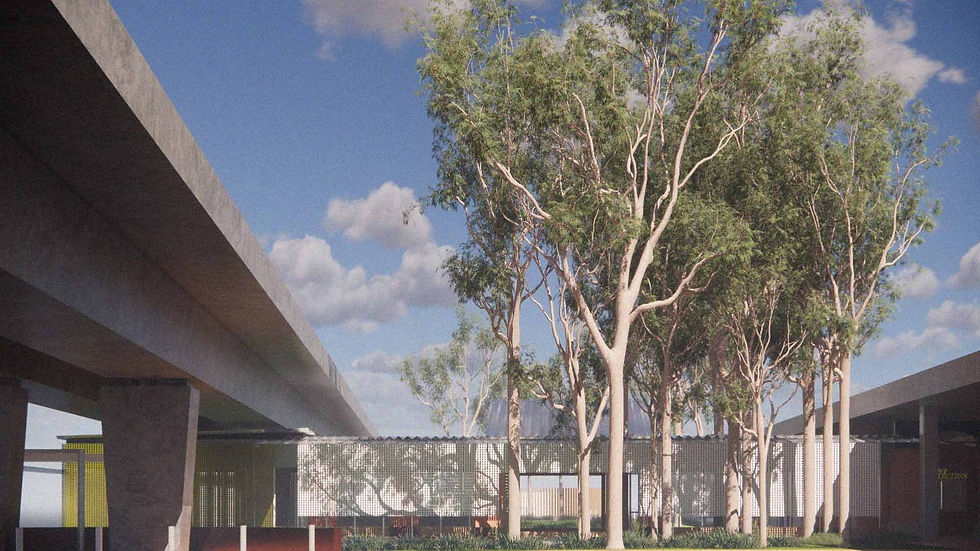
Single-storey restraint emphasises height of existing trees; library as gateway to the river, not as obstacle; continuous ground plane to river; weight expressed in materiality; welcoming shelter; maintaining existing scale of void between viaducts with permeability.

No trees are removed. Two trees penetrate the library's floor and ceiling. The spatial organisation of existing trees and scar trees determine the placement of the library.

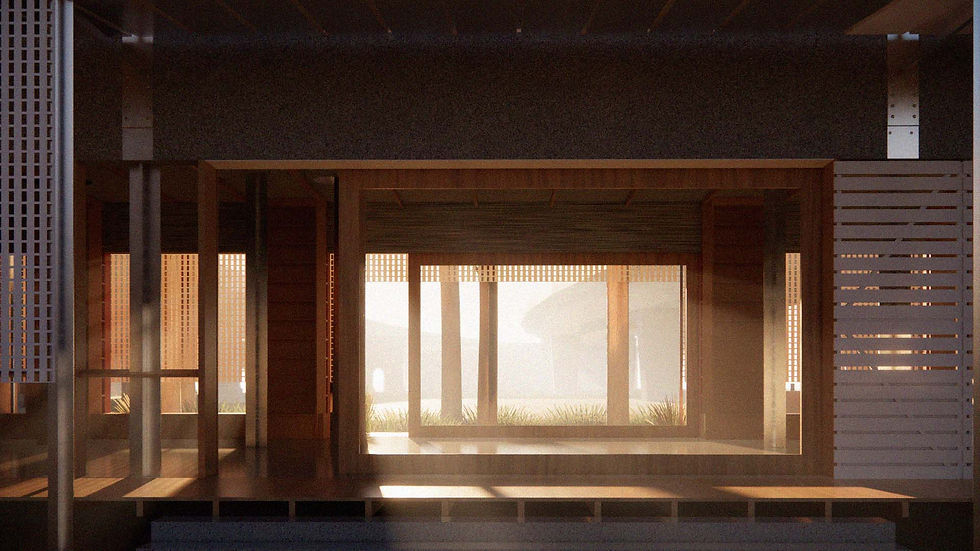
Rhythm of existing brick columns continued in depth and silhouettes of bookshelves. Window seats and agency over sliding windows activates the edge facing the grove of trees creating a homely, backyard condition.


Extended eaves and external vertical shading provides diffused light and sheltered access across the railway viaducts. Floor and ceiling joists expressed to create rhythm and break down space to habitable zones at human scale.

Library edge activated with curtain wall book display. Angular display box, corner window and rhythm of mullions flow with procession towards main entrance.

Sheltered access across railway viaducts creates a welcoming edge.

Permeability maintains impressive scale of existing E-W void. Large entrance creates civic square. Separation between concrete step and timber floor defines ascension threshold.




bottom of page